Showing posts with label Asia. Show all posts

Galeri Numismatik

If you're Malaysia coin and banknote collector, Sasana Kijang Bank Negara is a must visit place for you. They have a large numismatic collection of Malaysia coinage in their Galeri Numismatik (Numismatic Gallery). I had been waiting for the BNM money museum visit since early this year. It took me over 2 long hours to browse at all coins and banknotes collection that they have. That 2 long hours not enough since I actually missed on some of the collections on display by mistake. I will most probably go there again. Currently, they're less people coming to the Sasana Kijang. It helps me to look at all the collections without any interruption.


The "Galeri Numismatik" is located on the second floor of the visitor building. The gallery is a little bit dark maybe to conserve daily energy used and to help you look at the collections better. You will be greeted by BNM Barter Trade game once you enter the starting gate. Its need two persons to play the game and it teach you how hard it is to do barter trade instead of exchange money. Nobody in the gallery during my visit that day. I try to play the game alone but I then realized this is not what I am coming for.


They display their collections according to the earliest coinage in Malaysia history. You get to see the vast collection of early Malay coinage from Kelantan, Terengganu, Kedah, Perak, Melaka and also Sabah (British North Borneo) & Sarawak coins. Most of their Malay Sultanate collection are something that I never seen before in my life. You also get to see The famous Kelantan Gold Kupang, the kijang coin which is used as a BNM logo. The BNM logo idea suggested by the late Malaysia Bank governor Tun Ismail Mohd. Ali.

What I don't understand about the gallery viewing is the purpose of the coin slide on the wall. For me who like coin collection, the slide is just a distraction when it move while I look at the actual coin. Maybe I will suggest a few ideas on how to improve the numismatic viewing experience in your gallery BNM? Will write about it later.


In the gallery, you also get to see almost complete set of Malaysia commemorative coins collection since 1967 and the latest. All the coins are display on a wall but I think they're some problem viewing them for the coins on the lower wall. You need to crouch to look at the coins. It will be helpful if BNM can arrange them according to human standing eyes level. But maybe they have a kids on their mind when they're preparing the Malaysia coins commemorative wall.


You also get to see all Malaysia banknote designs and variety in this gallery, from RM1 notes until the obsolete RM1000 notes. Most of the notes are just specimen notes. I were hoping to see the Malaysia 1st series A1 bankotes but they don't display it in here. You can also see some pattern notes of Malaya & British Borneo and also Malaysia. Some of the design is far much better then the current Malaysia banknotes. They're also Tun Ismail Mohd. Ali signature plate on display and an old RM100 notes that had been signed & approved by Malaysia Finance Minister.


If you like numismatic, 2 hours not enough for you to visit and look at all the collections in here. A Facebook friend of mine had gone to the Numismatic gallery almost all days since its opening. A highly recommended place for Malaysia coin and banknote collector. Rumours about the new gallery as one with largest currency collection is not true though but it do have almost complete collection of Malaysia coinage history.

For more pictures of the new BNM money museum, you can visit my Facebook album; Sasana Kijang-2nd Floor-Galeri Numismatik.
Read More...

GOLD to go China

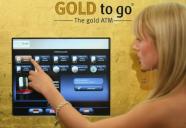
GOLD to go China has been installed recently in a busy shopping district in Beijing. GOLD to go is a gold vending machine produce by a German company, Ex Oriente Lux AG. The exterior of the machine is coated with a thin layer of gold and offers customers 320 items to choose from, ranging from 24-carat gold bars weighing 1, 5, and 10 grams as well as gold coins from Canada, Australia, and South Africa. Each comes in a gift box. Shoppers in the popular Wangfujing Street can insert cash or use a bank card to withdraw gold bars or coins of various weights based on market prices, the People's Daily said on its website. Each withdrawal is capped at 2.5 kilograms (5.5 pounds) or one million yuan (about $156,500) worth of gold, the report said.


China gold vending machine

Gold vending machines already exist in Britain, the United States, the Middle East and Europe.
The machine was launched Saturday by the Beijing Agricultural Commercial Bank and a gold trading company, the report said. They plan to install an unspecified number of machines in secure locations such as gold shops and upmarket private clubs.

Gold is often used as a hedge against inflation and the machines could prove popular among Chinese consumers looking for a convenient way to safeguard their cash amid rising prices.
Chinese consumer demand for gold soared 27 percent year-on-year to 579.5 tonnes in 2010, according to the World Gold Council. China is the world's second largest bullion consumer after India.

Source: AFP.

China Daily reported that the ATM dispensing gold bars and coins was switched on this weekend and then swiftly switched back off again. The vending machine shut down the same day because it was not producing receipts. No specific date when the ATM machine will be running again by Gongmei Gold Trading, the gold ATM Operator in China.

In the future, will this vending machine be available in Malaysia?
Read More...

Sasana Kijang location

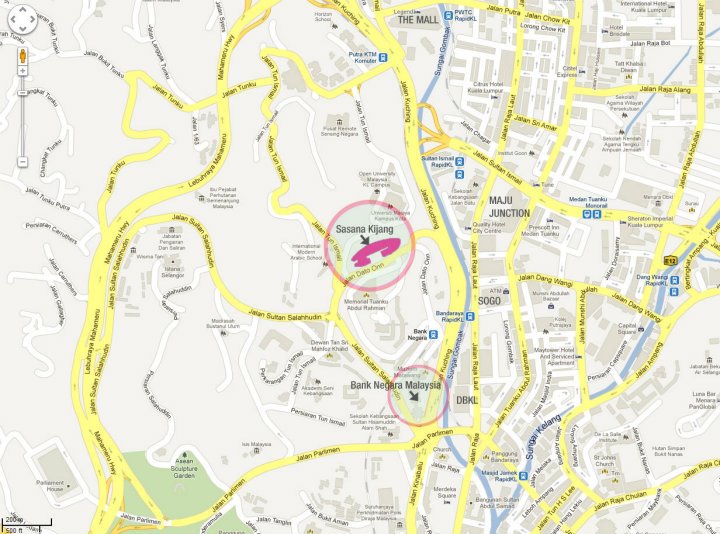
The new Bank Negara Malaysia Museum and Art Gallery already open for public. Many of you might be wondering, where is the new Sasana Kijang location. I am planning to go there tomorrow and Google for some information on the location of the new Bank Negara Malaysia (BNM) Money Museum. Exactly, Sasana Kijang wasn't just house new BNM Museum but also training facilities, offices, conference halls and BNM Knowledge Management Centre, among other. The Sasana Kijang is not far away from BNM Headquarters at Jalan Dato Onn but not everyone is familiar with Kuala Lumpur, right? You can look at the map provided (just click for large view).

Merdeka 2011 coin

If you came from KLIA, you can go to KL Sentral using ERL (Express Rail Link). In KL Sentral, there is many public transportation that you can find. If you're using taxi, just asked them to go to Sasana Kijang or New BNM Money Muzeum., the fare should be around RM10 from KL Sentral. If you want to walk a little bit, go find a KTM Komuter or Star LRT and buy a ticket to Bank Negara, the fare will be around RM2.00. When you arrived at that place, look for a hill near that place, the new Sasana Kijang is on that hill. Its around 2KM Walk and its normally hot in Kuala Lumpur (the best way is to stop at Bank Negara KTM Komuter Station, you can asked police station there). The new BNM Complex are also near Memorial Tunku Abdul Rahman and Memorial Tun Hussein Onn.

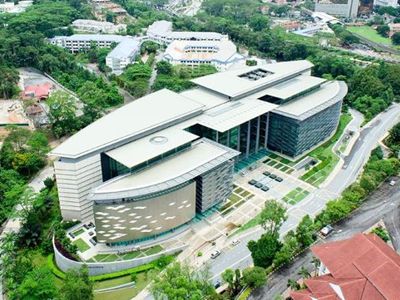
New BNM Complex
Picture by BNM Official Facebook page: New BNM Complex.

In the Bank Negara Malaysia Museum and Art Gallery you can view Bank Negara Malaysia Gallery, Economics Gallery, Islamic Finance Gallery, Numismatics Gallery, Children's Gallery and the Central Bank's art collection at the Art Gallery. The Museum and Art Gallery operation hour is from 10am to 6pm daily. Admission is free. Ample parking is available at LG4 and LG5 (basement parking) at Sasana Kijang. Parking fee is RM3.00 per entry.

Address:
Sasana Kijang, Bank Negara Malaysia
Jalan Dato' Onn, 50480 Kuala Lumpur.

Visit time: 10am-6pm. Everyday including Saturday & Sunday.
Parking: LG4 & LG5. RM3 per entry.
Fee: Free.
GPS Coordinates & Position: N03 09.439 E101 41.456

BNM also provide guided tours for groups of visitors from schools, universities and non-profit organisations. The tour is free of charge and must be booked in advance. Applications for the guided tour should be made at least two weeks before the date of the requested visit. Please contact BNMTELELINK via email at bnmtelelink@bnm.gov.my or call 1-300-88-5465 (for request from overseas, please call: +603-2174-1717) for details or further query related to visiting the Bank.
Read More...

Museum of History Ethnography Melaka

I had been visiting Museum of History, Ethnography & literature Melaka last year. The museum located in the red Stadhuys, at the junction of City Road and Church Street, Malacca. You can see the 'Dutch Square' infront of the building full of tourists all the time. The Dutch Square is Victorian Water Fountain and Tan Beng Seng Clock Tower built in 1886. Stadthuys (" town hall "in Dutch) were built in 1650 as an official settlement of the Dutch Governor and Deputy Governor, in which these structures represent the fine art of Dutch design.

Muzium Melaka

red Stadhuys

The museum open everyday (including Public Holidays) with a fee of RM5.00 for adults and RM2.00 for Children. It open from 9am until 5.30pm on weekdays and from 9am until 9pm on Saturday & Sunday. Museum of History is located on level two and Museum of Ethnografi is located on level one in the Stadthuys Building. If you love history and looking at old things like me, you have to spend 2 hours to visit this museum.

Pistol Antik

Syiling timah Portugis

Museum of History is located at the level of a display of the scene that became the cornerstone of Malaysia's history starts from the opening day of Malacca to the Portuguese colonial era, Dutch, English, Japanese until the country achieved independence. Ethnografi Museum gives special attention to the lifestyle of local communities of diverse races Malay, Chinese, Indian, Baba Nyonya, Chetti and Portuguese. The picture on the marriage customs, way of life, used equipment, musical instruments of choice and cultivated forms of agriculture is the main focus of the museum.

Syiling Melaka

Most of the coins collection are donated by Tony Lye Fong Nge, one of Malaysia Numismatic Celebrity and also author of The collection of Malacca coinage Book. This museum is a must visit place if you ever go to Melaka. You can also visit my new facebook page for more photos: Museum of History Ethnography Melaka.
Read More...

Taiwan new commemorative banknote mayhem

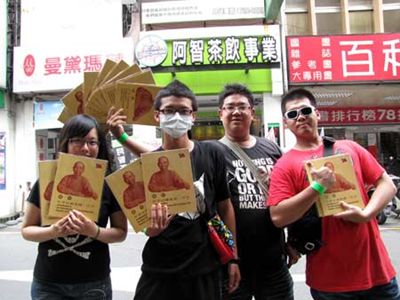
I suppose to write a post about something else just now but the Taiwan new commemorative banknote mayhem news in Taiwan China Post get my intention. Yesterday, Central Bank of China (CBC) release the “Collector's Version of the Republic of China Founding Centenary NT$100 Banknotes” with 500,00 sets up for grab among collectors. Almost all the set gone few hours after the sale immediately resold for as much as NT$2,000 each, far more than the face value of NT$300 and retail price of NT$500. Each set has three NT$100 bills in it. Pictures of people line up waiting to buy the new Taiwan commemorative banknote get my attention. I had seen people lining up for new coins, notes or stamps in Malaysia but its really a mayhem in Taiwan. Look like people are rallying to get a piece of the notes.

Taiwan banknote mayhem

Its all because of  local collectors and investors vied with those from Hong Kong and China for the memorabilia expected to rise in value soon. The rich investors and collectors hired  College students, housewives, and old folks with time to kill. Some speculators, armed with NT$10 million cash each, even stood in the streets outside the CBC building in downtown Taipei offering cash in broad daylight to smiling people for the prizes in their hands. The more enterprising among them, allegedly from Hong Kong, even brought mobile toilets and provided lunchboxes and cold drinks for their hired hands, who were paid around NT$180 an hour.

Taiwan new commemorative banknote

According to analysts, the unprecedented rush on CBC was caused by the insatiable demand for currency sets in mainland China, where such items are easily resold for a profit, especially after the Jan. 6, 2011, first CBC sale of these banknote sets. On the other hand, contract-bound local coin and banknotes dealers were so anxious to avoid being penalized for failure to deliver the sets they simply bid up the prices. The first 300,000 sets, all sold out at the beginning of the years, could then fetch a price up to NT$8,000 in a resale, more than 20 times higher than their face value and retail price. 

Source: Taiwan China Post

Nowadays, its even hard to find China Silver coins in Malaysia markets. Many of the coins had been bought by Chinese from mainland China who bought them at a very high price. What happen if this kind of frenzy@crazy thing start happening in Malaysia? Or is it already happening? You tell me. I am here just to share some interesting story that I found.
Read More...

100 pesos Ateneo Law School

The Bangko Sentral ng Pilipinas (BSP) has released a 100 pesos Ateneo Law School commemorative banknote. The design is the same as the current Philippine 100 pesos but with a 75th diamond jubilee logo of Ateneo Law School. The Ateneo de Manila Law School is a Catholic and Jesuit institution situated within the larger Ateneo de Manila University. It was established in June 1936 to help form and develop good and committed lawyers. This is not the first time 100 pesos has been used as a commemorative banknote.


Philippine 100 Pesos commemorative 

  • Centennial celebration of Philippine Independence-with an overprint of the Centennial logo in 1997.

  • UP Centennial commemorative-overprint of the iconic UP Oblation to commemorate the centennial of the University of the Philippines (UP) in 2008.

  • 60 years of Central Banking commemorative-overprint commemorating 60 years of central banking on 9 July 2009. The overprint appears on the watermark area on all six circulating denominations.

  • Celebrating 100 years of Excellence in Law 1911-2011.-100 Years of University of the Philippines (UP) College of Law

  • 75th years Ateneo of Law School-75th diamond jubilee logo on obverse.


President Aquino receives commemorative 100 peso bills
Photo credit: Malacañang Photo Bureau


On 6 June 2011, Philippine President, S. Aquino III  received a commemorative book from Dean Cesar Villanueva, as well as commemorative 100 peso bills with the 75th diamond jubilee logo from Banko Central Governor Amando M. Tetangco. He was the guest speaker in the 75th Anniversary of Ateneo Law School in Rockwell Makati campus. The president in his speech, addressed to the alumni of the school, stresses the importance of providing legal assistance to the poor and the marginalized sector of our society to attain equal justice for all. After his speech he

I heard that our friends in Philippines get some of the commemorative banknotes from their bank ATM? Is that mean they get it at a face value? 


Read More...

Philippines Peso notes authentication levels

The Bangko Sentral ng Pilipinas (BSP) last year has released a New Generation Currency (NGC), P20, P50, P100, P200, P500, and P1,000; all have new designs and security features. Philippines NGC printed with Bioguard technology by Arjowiggins. Bioguard produces banknotes that are treated to prevent bacteria from multiplying. The anti-bacterial property has been tested to resist washing and will last throughout the lifetime of the banknote. Do you know that BSP has incorporated security features that allow for four levels of authentication?


Philippines Peso notes authentication levels:


(1) Level I: Security features which can be easily recognized by the public without the use of special instrument. These are the “look, feel, tilt” elements in the notes such as watermark, security thread, and security fibers.


(2) Level II: Security features recognizable by professional cash handlers or bank tellers with the use of magnifying lens or ultraviolet light. Examples are fluoro-phosphorescent features, security fibers, and microprinting.


(3) Level III: The hidden or covert security features reserved for the use of Bangko Sentral.


(4) Level IV: Forensic security features for the use of law enforcers in testifying whether a banknote is genuine or counterfeit. These are detectable at specialized laboratories.


The central bank presented these authentication methods as it launched the new currency generation of P20, P50, P100, P200, P500 and P1, 000 banknotes around Western Visayas recently. An example of these security features are the embossed prints of the words “Republika ng Pilipinas” and “Sanlibong Piso” on the P1,000 bill that can be detected by the “feel” method. BSP said the public will benefit from the security features of the new currency as they will be protected from receiving fake money.


Source: Pia.gov.ph


Read More...

Tensho Oban for auction

Tensho Oban for auction by Heritage Auctions on 9 September 2011. The Tensho Naga Gold Oban - Omodaka variety ND (1573-1591), one of the rarest of all Oban varieties. The Tensho Oban weight was fixed at about 165 grams and was hammered into three different sizes. This example is the 'NAGA' (or long type) and the largest physical size of all the Obans minted. The estimate price for this auction are $300,000 - $350,000.


This is an extremely rare variety of the Tensho Naga Oban due to the different upper stamp of the two stamps on the reverse: the Omodaka stamp. The Mori family was given permission by Toyotomi Hideyoshi (the great uniter of Japan) to make this official Oban and stamp the symbol of the their family on the reverse, which was the Omodaka plant leaf and flower. The large gold coin plate minted in 73% gold and 27% silver. The ink is original and a vibrant black color. There is scuffing on the high points of the obverse with a small amount of ink missing. Repair apparent on both sides at 8 o'clock on the obverse, and at the matching area on the reverse at 4 o'clock, as evidenced by the disturbance of the original texture of the surfaces near the edge. The repair seems to have been done over a hundred years ago and carefully hammered after perhaps being dropped.


Oban were made of hammered gold with a face value of 10 ryo or 10 Koban coins. The word Oban means 'large stamped' in Japanese. The earliest ōban were made in the 1580s, when the feudal lord Toyotomi Hideyoshi (1536/7-98) co-operated with wealthy merchants in the Kansai district of central Japan and monopolized Japan's metal mines. He then began to mint gold coins of fixed quality.


The auction will take place at Long Beach, California or you can bid it online at: The Tensho Naga Gold Oban.


Read More...

UAE's 1st gold bullion coin

UAE's 1st gold bullion coin has been unveiled by the Dubai Multi Commodities Centre Authority (DMCC), the Government of Dubai entity on Monday. Designed by DMCC, the “Khalifa” coin features a portrait of His Highness Sheikh Khalifa on one side, and on the other, Burj Khalifa, the world’s tallest tower. DMCC is also in discussions with the UAE Central Bank to designate the gold bullion coin as the first legal tender in the UAE and the Middle East as a whole. This Dubai Gold Coins are said to be a new Krugerrand. This Dubai Gold coins will be a legal tender coins for UAE.


Ahmed Bin Sulayem, Executive Chairman of DMCC, said:


“This innovative gold bullion coin was conceived to satisfy the demands from investors seeking access to gold as protection against the ongoing global economic uncertainty. The gold bullion coin pays homage to our President, His Highness Sheikh Khalifa Bin Zayed Al Nahyan, his vision, guidance and leadership".


“The Burj Khalifa is a symbol of the UAE as a progressive, innovative nation that whilst rich in heritage and traditions continually works to build a modern developed society. In this way the gold bullion coin stands as a national emblem which reflects the determination and achievements of the UAE federation".


The new gold “Khalifa” coin will carry DMCC’s stamp of quality and authenticity. The five-ounce coin prototype, which was unveiled in a special ceremony attended by senior representatives in the gold trade industry, was minted by Argor-Heraeus SA in Switzerland, which is accredited by the DMCC’s Dubai Gold Delivery (‘DGD’) standard. The DGD gold standard, launched by DMCC in 2005, is the adopted quality standard for gold and silver bars production and technical specifications in the region and is benchmarked to international standards.


Source: DMCC.ae


Read More...

702million new peso banknote

Central Bank of the Philippines yesterday announced that 702million new peso banknote has been in circulation. The announcement made by Currency Analysis and Redemption Division, Cash Department Manager Maja Gratia Malic, during the recent public information campaign on the NGC here at the CB office. The new generation currency (NGC) banknotes released on 17 december 2010 with many new security features. She said the upgraded security features like new design, threads, texture, groves, silhouettes and others were especially created to prevent the spread of counterfeits.


Maja Gratia Malic said he cannot give the amount per area but was sure it was spread evenly in Luzon, Visayas and Mindanao for initial use as a legal tender. The six banknote denominations include 20 peso, 50 peso, 100 peso, 200 peso, 500 peso and 1000 peso bills. Coin denomination redesigning is now also on the process. The old currency can still be legally used for three years to give enough time for the public to make a full transition to the new NGC, she said.

Currency Management Sub-sector Managing Director Iluminada Sicat said attempts were already made to make counterfeits but fell short of copying the original and were thwarted.

Source: Philippine Information Agency.

How many Malaysia banknotes in circulation? Anybody know?

Read More...

Hong Kong 100, 50, 20 dollars notes

Hong Kong 100, 50, 20 dollars notes has been unveiled by Hong Kong Monetary Authority (HKMA) and the three note-issuing banks (Standard Chartered Bank (Hong Kong) Limited, The Hongkong and Shanghai Banking Corporation Limited and Bank of China (Hong Kong) Limited). The $100, $50 and $20 notes incorporate the same state-of-the-art security features as the new $1,000 and $500 notes which are already in circulation, and help the visually impaired differentiate between the denominations.


Monetary Authority Chief Executive Norman Chan said the new notes will be phased in from November, after which the entire Hong Kong 2010 series will be in circulation.

“The new $1,000 and $500 banknotes, which have been in circulation since December and February, have received a very positive response from the public. I am confident the new $100, $50 and $20 banknotes will be equally well received.”


They were designed by the respective note-issuing banks (Standard Chartered Bank, Hongkong & Shanghai Banking Corporation, and Bank of China) and approved by the Financial Secretary. They are printed by Hong Kong Note Printing. All existing banknotes continue to be legal tender. They will circulate along with the new banknotes and be gradually withdrawn from circulation when they become physically unfit for circulation.

New Hong Kong dollars security features:

1. Dynamic Colour-changing Pattern

When the note is tilted, two visual effects appear: the colour of the pattern shifts between green and gold, while at the same time a shimmering horizontal bar is seen to be rolling up and down.


2. Colour-changing Windowed Metallic Thread

When the note is tilted, the thread shifts in colour between magenta and green. When examining it closely, microtext to build the large alphabets 「H」 and 「K」 can be seen.


3. Concealed Denomination

Visible when the note is tilted.


4. Iridescent Pattern

Shimmering when the note is tilted under a bright light.


5. Enhanced Watermark

The watermarks of the three note-issuing banks are standardized. Multi-tonal watermark of a bauhinia flower, highlight watermark of the denomination numeral and dot pattern can be seen when the note is held up to the light.


6. Fluorescent See-through Pattern

The patterns on the front and back fit perfectly when the note is held up to the light. When the note is put under ultraviolet light, two fluorescent colours appear.


7. Serial Numbers

Two sets of serial numbers with progressively larger digits in adjacent positions. One set horizontally at the bottom-left corner, and another set vertically on the right side of the note, which is fluorescent red under ultraviolet light.


8. Embossed Feel

Raised printing giving the note a strong embossed feel by touch.


Source: HKMA, news.gov.hk


Read More...

Singapore 46 Years of Independence coins

The Monetary Authority of Singapore (MAS) Launches the Singapore 46 Years of Independence Coins on 13 July 2011. The coin design draws inspiration from the 2011 National Day Parade (NDP) theme, ‘Majulah! The Singapore Spirit’. The official NDP 2011 logo is at the upper centre of the coin, while a mosaic formation of Singapore’s coastline by performers holding coloured cards on the floating platform occupies the bottom half of the coin. “The Singapore Spirit” tagline for the 2011 NDP theme runs across the mosaic formation. The diversity of people celebrating is depicted through human silhouettes at the centre of the coin. The newly opened Helix Bridge and the Esplanade Outdoor Theatre are also incorporated in the design to portray the NDP venue surroundings.


$5 Silver Proof Coin
The Silver Proof coin comes in a unique octagonal shape, the first of its kind in Singapore. The obverse of the coin bears the Singapore Arms with the year-date 2011. 31.10 grams of 999 fine silver with full colour application. Coin across corner size of 40.70mm. Mintage of 5,000 pieces.


$2 Cupro-Nickel Proof-Like Coin
Proof-like condition with selective colour application. Coin diameter of 38.70mm. Mintage of 6,000 pieces.


2-in-1 Coin Set
The premium set with a limited mintage of 2011 sets comprises a $5 Silver Proof Coin and a $2 Cupro-Nickel Proof-Like Coin. The coins in this set form part of the mintage for the individual coins.

The coins will be issued on Wednesday, 27 July 2011. The coins will be sold by The Singapore Mint. For enquiries and coin orders, the public can contact The Singapore Mint at 6566 2626 / 6222 2486 / 6238 9890 / 6895 0288 / 6895 0358, or www.singaporemint.com. Last year Singapore 45 Years of Independence coins come with innovative rectangular shape


Read More...

Communist Party of China 90th anniversary coin

On Wednesday, China's Central Bank released a commemorative coins for the coming 90th founding anniversary of the Communist Party of China (CPC) in Hangzhou, Zhejiang province. The coin, made of brass alloy and 30 mm in diameter, has a face value of five yuan ($0.77). A total of 60 million coins have been issued this time by the People's Bank of China, or the central bank.

Photo by Xinhua: CPC 90th anniversary coins

The obverse of the coin carries the country's name and the year of 2011. The reverse side are images of the CPC emblem and flag, as well as a peony, pigeon, five stars, and the words "the CPC 90th founding anniversary" and "1921-2011." This coins can be circulated as normal currency. The anniversary of the Communist Party of China will fall on July 1.

Source: China Daily.


Read More...

RM20 banknote will be back

Anyone realize that RM20 banknote will be back according to a Bank Negara (BNM) Statement regarding BNM announce Malaysia new banknote 2011? It has been 16-year hiatus, the RM20 banknote will be re-introduced by Bank Negara. It is part of a new design of Malaysian banknotes and coins which will be issued for circulation early next year in an exercise that is undertaken periodically every 12 years.


“The re-introduction of the RM20 banknote in the new currency series is primarily to function as an intermediary denomination to bridge the value gap between RM10 and RM50 for greater convenience in making payments,” Bank Negara told The Star in a statement yesterday.

With the new RM20 banknote, the central bank expects a reduction in overall demand for RM10 and RM50 banknotes. The old RM20 banknote was introduced during the second series in 1982 and was discontinued in 1995. It featured Malaysian traditional ornamental designs and the Bank Negara headquarters on its reverse side.

Source: The Star


Read More...

Indonesia Finance Minister signature on new banknotes

Indonesian Legislators approved the governments’ request to add Indonesia Finance Minister signature on new banknotes during the final debate at House Commission XI overseeing financial affairs on Tuesday. The government and the House of Representatives have finally agreed to pass the currency bill for final approval at the House plenary session next week, despite criticism from a central bank deputy governor. The finance minister will begin signing the banknotes on the 69th anniversary of the Independence Day on 17 August 2014. The currency bill has been delayed several times already due to prolonged debates on the additional signature.

Photo: Indonesia Finance Minister Agus Martowardojo

However, contrary to his institution’s stance, Bank Indonesia (BI) deputy governor for payment systems, Budi Rochadi, made a controversial statement on Monday, saying that the government would have to hold certain responsibilities if it signed the nation’s banknotes. BI is the nation’s monetary authority in charge of money circulation in the country, from designing and printing to issuing notes.

“The current concept of the currency bill has deviated, taking into account unimportant matters, for example the signing of the rupiah notes by the government through the finance minister,” Budi Rochadi said as quoted by detikfinance.com.

Finance Minister Agus Martowardojo, however, said the central bank’s bank note authority would remain the same and that the government’s signature would ensure its “guarantee” that it was indeed Indonesia’s money.

“The government’s signature implies that, if people do not believe, it is the guarantee that the money is official Indonesian money,” he told reporters before a meeting with House Commission XI, which deliberated on the bill with the government.

Budi, however, questioned the deliberation, as BI was never included despite the institution’s authority in issuing money. Answering Budi’s concerns, Agus said that President Susilo Bambang Yudhoyono had officially assigned the Finance Ministry to deliberate on the bill with the lawmakers.

BI’s official stance, Agus added, reflected the government’s. “BI has confirmed something that has been agreed upon, for the government to represent it in the deliberation of the currency bill, because the Finance Ministry has been mandated by the President.”

“Pak Darmin [BI Governor] has issued a letter, saying that there is no problem in the bill. The only concern is about redenomination, which will be regulated in one specific, separate law,” Agus said, indicating that Budi’s statements did not match the central bank’s official stance.

Both the government and the House agreed last year to not include the central bank’s redenomination plan, which would cut several zeros from the rupiah, in the currency bill.

With the government’s signature on banknotes, concerns arose that if the central bank and government were ever at odds in a time of crisis, for example in printing more money for public circulation, potential debates would hamper the issuance.

“The government will respect the authority of the monetary regulator,” Agus assured.

Harry Azhar Aziz, vice chairman of Commission XI, said the decision was final and a plenary session had been scheduled for Thursday, May 31, to pass the bill.

Another notable point in the bill includes a life prison sentence for counterfeiters, he added.

Source: The Jakarta Post.


Read More...

China largest coin auctioned

China largest coin auctioned by China Guardian Auctions Co Ltd for $1.18 million (7.70 million yuan) at an auction in Beijing. The Y2K Commemorative Gold Coin with a face value of 3000-yuan, weight at 10 Kilo of .9999 pure gold and minted in 2000; come with original package and certificate no.17. This gold coin is the biggest of its kind first appeared in the world’s modern coinage. Only 20 of this coins are minted. In 2000, this People's Bank of China 2000 Millennium commemorative gold coins, listed in World Guinness record book as the largest and heaviest gold coin.


The large coin was auctioned off by China Guardian Auctions Co Ltd after twenty-two rounds of bidding on Saturday. Minted in 2000, the coin is the heaviest gold coin minted ever since the Chinese government started minting gold and silver coins in 1949, said Guo Xueguang, manager with the philatelic items and coin department in Guardian Auctions. The coin is 99.99 percent gold, with a par value of 30,000 yuan. It combines both traditional and modern markings, making it highly valuable for collectors, he said.

Gold and silver coins have become more popular in recent years for their surging prices and ability to resist inflation. A 5-kilogram commemorative coin issued by China was auctioned for 10.30 million yuan in Japan last April, said Guo.

Source: China Daily


Read More...

China Peking Opera Mask coins

The People’s Bank of China has issued a series of gold and silver commemorative coins for China Peking Opera Mask coins(series II)on April 15, 2011. The series consists of 3 coins, including 1gold coin and 2 silver coins, all of which are the legal tender of the People’s Republic of China. The reverse design of the coins depicts the famous Peking Opera facial mask. The series of gold and silver commemorative coins bear the common obverse of the emblem of the People’s Republic of China, the title of PRC and the year date, with the background of Chinese traditional pattern design of auspicious cloud and Hai Shui Jiang Ya--the most famous design depicted from stage costume of Peking Opera.


Gold coin Specification:
Face value: 100Yuan
Metal: gold
Fineness: 99.9%
Quality: proof
Weight: 1/4oz
Diameter: 22mm
Total Mintage: 50,000 pcs

Obverse:
The emblem of the People’s Republic of China, the title of PRC and the year date, with the background of Chinese traditional pattern design of auspicious cloud and Hai Shui Jiang Ya--the most famous design depicted from stage costume of Peking Opera.

Reverse:
The Peking Opera facial mask of courageous and sagacious “Guan Yu” (partially colored), the words “Guan Yu” in Chinese and the face value.


Silver coin Spesification:
Face value: 10Yuan
Metal: silver
Fineness: 99.9%
Quality: proof
Weight: 1oz
Diameter: 40mm
Total Mintage: 50,000 pcs per design.

Obverse:
The emblem of the People’s Republic of China, the title of PRC and the year date, with the background of Chinese traditional pattern design of auspicious cloud and Hai Shui Jiang Ya--the most famous design depicted from stage costume of Peking Opera.

Reverse-Design 1:
The Peking Opera facial mask of righteous and candid “Lu Zhishen” (partially colored), the words “Lu Zhishen” in Chinese and the face value.

Reverse-Design 2:
The Peking Opera facial mask of selfless and honest “Shan Xiongxin” (partially colored), the words “Shan Xiongxin” in Chinese and the face value.

The series of gold and silver coin is minted by Shenzhen Guobao Mint and solely distributed by China Gold Coin Incorporation.

Pictures via email by Pabitra Shaha.

Read More...

Safank Fank

Video Gallery