Showing posts with label Banknote. Show all posts

Extremely rare £1million note on auction

Extremely rare £1million note on auction by British private collector and is expected to sell for only £50,000 ($80,000). Its sound like an easy way to make it to the millionaire club but the banknote is no longer legal tender. The banknote issued by British Treasury on 30 August 1948 for economic reconstruction but cancelled on 6 October 1948. This Treasury note entitles the Bank of England to payment of one million pounds on demand out of the consolidated fund of the United Kingdom. The notes were only in use for six weeks and were never meant for public circulation. They were only intended for internal use between financial institutions to track money, reported the Daily Telegraph.
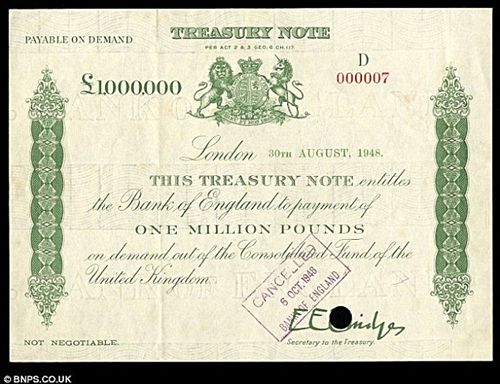
million pound banknote


'How it found its way from the bank in the first place is anybody's guess,’ auctioneer Chris Webb told the Daily Mirror.

The notes was one of only nine given to the UK by the U.S. in President Harry Truman's Marshall Aid plan after World War Two. Only two of them have survived (numbers 000007 and 000008). The latter went for £78,300 ($125,000) at auction three years ago. Number 000007 was sold in a private sale for £8,000 ($13,000) in 1977 and listed by the Guinness Book of Records as the highest denomination privately owned at the time. The U.S. loaned the money at the time because it thought a strong Western Europe would help be a buffer to contain the rise of Russian communism.

Source: Daily Mail
Read More...

HK$1,000 Gold Leaf banknote

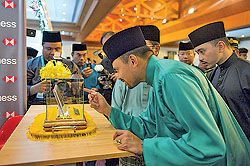
Today, I read via Brunei Buletin about a unique HK$1,000 Gold Leaf banknote presented by HSBC Brunei as a pesambah to His Majesty the Sultan and Yang Di-Pertuan of Brunei Darussalam. The unique banknote is presented during the Hari Raya exhibition organised by Yayasan Sultan Haji Hassanal Bolkiah. On hand to present the pesambah was the Chief Executive Officer of HSBC Brunei, Mr Vincent Ho. It is exactly a replica of HK$1,000 in 24K gold, from the look of it.

Hong Kong Gold Foil banknote

Gold Leaf banknote of Hong Kong

What exactly a Gold Banknotes?
Normally you can see these kind of banknote sold in internet (eBay). Its exactly a replica of the real banknotes produced with a 24K gold foil. The weight of the notes normally is just around 5-7 gram and it need to be in a frame to make sure the notes does not wrinkled or damaged.

What notes has been produced?
You can find many country notes has been produced into gold banknote, just Google "Gold Foil Banknote"; US Dollars, Britain Pound, Japanese Yen, Australia Dollars etc. But I never seen any Malaysia Ringgit in Gold Foil before.

Is it worth it to buy Gold Foil notes?
In my private opinion, its not worth it because the notes always sold at a higher price then the notes value of gold. Don't forget you also need to include the shipping cost. 

What is Pesambah?
Pesambah mean token of appreciation or gift.

I cannot find any other information about the HK$1,000 Gold Leaf banknote presented to His Majesty the Sultan. Most of the information come from the same source and don't tell much about the banknote itself. If someone want to give a gift to me, this gold foil banknote will be nice.
Read More...

Taiwan new commemorative banknote mayhem

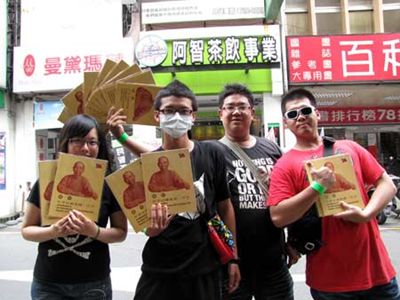
I suppose to write a post about something else just now but the Taiwan new commemorative banknote mayhem news in Taiwan China Post get my intention. Yesterday, Central Bank of China (CBC) release the “Collector's Version of the Republic of China Founding Centenary NT$100 Banknotes” with 500,00 sets up for grab among collectors. Almost all the set gone few hours after the sale immediately resold for as much as NT$2,000 each, far more than the face value of NT$300 and retail price of NT$500. Each set has three NT$100 bills in it. Pictures of people line up waiting to buy the new Taiwan commemorative banknote get my attention. I had seen people lining up for new coins, notes or stamps in Malaysia but its really a mayhem in Taiwan. Look like people are rallying to get a piece of the notes.

Taiwan banknote mayhem

Its all because of  local collectors and investors vied with those from Hong Kong and China for the memorabilia expected to rise in value soon. The rich investors and collectors hired  College students, housewives, and old folks with time to kill. Some speculators, armed with NT$10 million cash each, even stood in the streets outside the CBC building in downtown Taipei offering cash in broad daylight to smiling people for the prizes in their hands. The more enterprising among them, allegedly from Hong Kong, even brought mobile toilets and provided lunchboxes and cold drinks for their hired hands, who were paid around NT$180 an hour.

Taiwan new commemorative banknote

According to analysts, the unprecedented rush on CBC was caused by the insatiable demand for currency sets in mainland China, where such items are easily resold for a profit, especially after the Jan. 6, 2011, first CBC sale of these banknote sets. On the other hand, contract-bound local coin and banknotes dealers were so anxious to avoid being penalized for failure to deliver the sets they simply bid up the prices. The first 300,000 sets, all sold out at the beginning of the years, could then fetch a price up to NT$8,000 in a resale, more than 20 times higher than their face value and retail price. 

Source: Taiwan China Post

Nowadays, its even hard to find China Silver coins in Malaysia markets. Many of the coins had been bought by Chinese from mainland China who bought them at a very high price. What happen if this kind of frenzy@crazy thing start happening in Malaysia? Or is it already happening? You tell me. I am here just to share some interesting story that I found.
Read More...

Ringgit sign Aishah

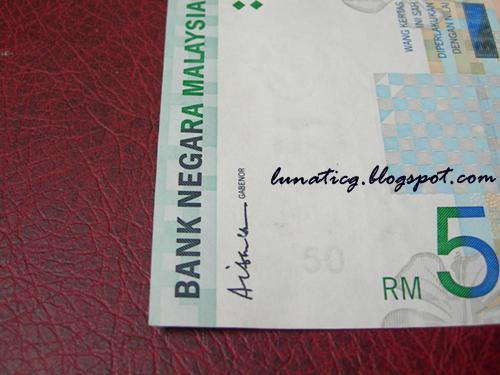
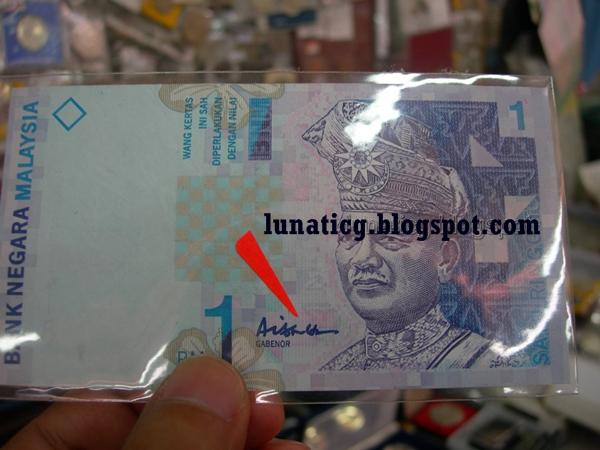
A lot of my friends who are not a collector asking about "ringgit sign aishah" (Malaysia Ringgit banknote signed by Aishah). Many of them believe or just heard rumours that a ringgit notes signed by this Aishah can get them a high return if they sell it to collector. Some heard rumours saying that notes signed by Malaysia former Permaisuri Agong Puan Seri Aisyah. Many of them also knew that there is no Bank Negara Malaysia (BNM) governor name Aishah. The only women who ever been appointed as a BNM governor is Y.M. Tan Sri Dato' Ungku Dr. Zeti Akhtar binti Ungku Abdul Aziz.

Aishah banknote

Who exactly BNM Aishah?
The signed is exactly owned by Tan Sri Dato' Seri Ali Abul Hassan bin Sulaiman, BNM Governor from September 1998 until April 2000. His signature look like "Aishah".

Why Malaysian looking for Aishah banknote?
They heard rumours saying that the notes signed by Aishah can get them high value. Some also heard that you can get 10 times the value if you change them at BNM. Many people don't know that you can only get face value if you change any old ringgit in BNM. You can read my post about that in Tukar duit lama di BNM?

Aishah banknote

What is the truth about duit Aishah?
What many collector are looking for is a RM1 notes signed by Tan Sri Dato' Seri Ali Abul Hassan bin Sulaiman with CR prefix. The notes can go up to RM2000 for a Uncirculated notes. The notes get into circulation by mistake and only few of that banknotes exist in this world and only few UNC notes exist. Its a very rare notes for Malaysia Numismatic. They're also people who are looking for RM50 notes and RM100 notes signed by Tan Sri Dato' Seri Ali Abul.

Nilai duit sign Aishah@Ali Abul
RM50 BG-UNC Price=RM850.
RM50 BH-UNC Price=RM400.
RM50 BJ-UNC Price=RM450.
RM50 ZA (replacement notes)-UNC Price=RM1,800.
RM100-UNC Price=RM320.
RM100 ZA (replacement notes)-UNC Price=RM460.

Other than that, here is the price of other Aishah banknote:
RM2 side sign-UNC Price=RM50.
RM2 ZD (replacement notes) side sign-UNC Price=RM90.
RM10 side sign-UNC Price=RM120.
RM10 ZA (replacement notes) side sign-UNC Price=RM250.
RM2 center sign-UNC Price=RM15.
RM5 center sign-UNC Price=RM25.
RM10 ZA (replacement notes) center sign-UNC Price=RM100.

Please remember
You don't get the high price from changing them in Bank Negara! You also cannot get the high price from selling it to any banknote dealers. The best way to get a high price for that kind of banknotes by selling them online yourself. You can read my post on How to sell coins as a guide.

PS: To all blogger who copycat my post, please give a link back to my blog original post! I already report hundreds of blogs for DMCA copyright complaints. Almost all blogs I reported had already been deleted.
Read More...

South Sudan New Currency

New nation, Republic of South Sudan announced its new currency, South Sudanese Pound last week. According to information in Wikipedia the new banknote is subdivided into 100 piastres. It was approved by the Southern Sudan Legislative Assembly prior to secession on 9 July 2011 from Sudan. The banknotes feature the image of John Garang, the deceased leader of South Sudan's independence movement. Six different denominations (1, 5, 10, 25, 50 and 100 pounds) in the form of banknotes have been confirmed, and four denominations (1, 5, 25 and 50 piastres) will be issued in the form of coins.

South Sudan New Currency

"Today, President Salva Kiir said in the council of ministers that it is the last day of exchanging the Sudanese pound into the South Sudan pound," Information Minister Barnaba Marial Benjamin told reporters in Juba.

"From tomorrow (Friday), the Sudanese Guinea (pound) is illegal tender. It will no longer be used to buy anything in the Republic of South Sudan," he added.

Separately, Khartoum announced that, from 1500 GMT on Thursday, the introduction of the new Sudanese pound note in the north was partly complete.

"As of this date, the old 10, 20 and 50 pound notes... will be unfit for circulation, while trading in the 1, 2, and 5 pound notes of the old category will continue... until further notice from the bank," the Central Bank of Sudan said in a statement.

After independence, southern officials were concerned that their country would be flooded with old Sudanese pounds, of which there were an estimated 2.1 billion already in circulation. Benjamin said 1.6 billion Sudanese pounds had been collected in South Sudan. The Sudanese pound, which is equal in value to the South Sudan pound, has seen its purchasing power plunge this year, mainly because of the surge in food prices and weak state finances. One US dollar can now buy up to 3.5 Sudanese pounds on the black market, compared with the official exchange rate of about 2.7 Sudanese pounds.

Source: Wikipedia, AFP.

A new country emerge and a new banknote come into circulation for us collector to collect.
Read More...

Plastic fiver pound

I had been reading about Bank of England plastic fiver pound since 2005 but until today, only a Northern Ireland plastic fiver has been produced. Today, I read a news about England  £5 Polymer again in Independent UK. The Bank of England is considering a plastic fiver and a £50 with transparent slots to improve durability and protect against counterfeiting in the next generation of bank notes. De La Rue has a contract to produce the UK's notes until 2015. However, it is understood that the contract could allow new suppliers to produce some of these updated notes ahead of that date.

Plastic fiver
Picture by BBC: Northern Ireland £5 note
Bank officials are believed to be concerned that the £5 note, which as a low denomination changes hands quickly, is not tough enough. Sterling notes are currently made mainly from cotton, but Australia paved the way with a polymer currency that better withstands everyday use. 
A source close to the Bank said: "This is at the evaluation stage. A decision won't be made for the next year or two and production a little while after that, but a plastic £5 note is a possibility even though it won't provide as much security as other options." 
A polymer note is considered easier to replicate than those with clear, plastic windows within a traditional cotton fabric. The Bank is considering the latter option for its other notes, favouring a trial with the £50. 
A far less used note, the £50 does not require the durability features of a fiver, but is more costly to the economy if counterfeited on a large scale. "The Bank is looking at ways of putting a see-through, transparent window on notes as a primary security feature," said the source.
An industry source added: "There are ongoing conversations about the future features of banknotes, particularly in order to combat counterfeiting, between the Bank and industry suppliers."
Source: Independent

With the introduction of the new £5 polymer note will the £5 paper note become the collectibles item? Only time will tell but find a UNC £5 note are certainly a hassle in Malaysia. I personally don't think  Bank of England will give it a try for Polymer Fiver Pound. They're still looking for other option that far much better then Polymer notes. But it is certainly a good news for collector like us, we can start keep the good condition £5 paper note. Their price will be going up one day.
Read More...

New Iraq Currency

A new Iraq currency has been planned by Central Bank of Iraq (CBI). CBI Governor, Sinan al-Shabibi in his interview with Al-Sabaah claims that the new currency’s attributes will make it ‘difficult’ to falsify. The Central Bank and the Finance Committee in the House of Representatives agreed to hold further meetings to finalize discussions on the project. The central bank is determined to raise three zeroes from the of the new Iraqi currency and presented its project to the government and the House of Representatives. Deleting three zeros from the Iraqi currency will raise its value, and increase the purchasing power of citizens. Iraq has 30 trillion dinars in circulation and the project would bring liquidity to 30 billion.

New Iraq banknote


Haven't you heard that Iraqi Dinar revalue soon? It has been all over news and everyone is buying Iraq Dinar stock. Iraqi Budget already approved by Parliament, does this clear the way for the Iraq Dinar to RV drastically & quickly? Its a little bit hard to find Iraq Dinar now since the news come out.


Iraq is recovering after years of war and sanctions and oil still dominates the economy, accounting for 95 per cent of government revenues. Investors complain Iraq's still heavily centralized economy is mired in red tape and bureaucracy, and transactions are still often carried out in cash. Planning and the preparation for reform was complete and the proposal would be handed to the government in the next month. It would also need parliamentary approval.

Iraq stock exchange is ready and they're in a process to start a global stock exchange. If their currency are accepted by Global market, we can most probably see a RV (revaluations). RV will happen sooner or later.


Read More...

100 pesos Ateneo Law School

The Bangko Sentral ng Pilipinas (BSP) has released a 100 pesos Ateneo Law School commemorative banknote. The design is the same as the current Philippine 100 pesos but with a 75th diamond jubilee logo of Ateneo Law School. The Ateneo de Manila Law School is a Catholic and Jesuit institution situated within the larger Ateneo de Manila University. It was established in June 1936 to help form and develop good and committed lawyers. This is not the first time 100 pesos has been used as a commemorative banknote.


Philippine 100 Pesos commemorative 

  • Centennial celebration of Philippine Independence-with an overprint of the Centennial logo in 1997.

  • UP Centennial commemorative-overprint of the iconic UP Oblation to commemorate the centennial of the University of the Philippines (UP) in 2008.

  • 60 years of Central Banking commemorative-overprint commemorating 60 years of central banking on 9 July 2009. The overprint appears on the watermark area on all six circulating denominations.

  • Celebrating 100 years of Excellence in Law 1911-2011.-100 Years of University of the Philippines (UP) College of Law

  • 75th years Ateneo of Law School-75th diamond jubilee logo on obverse.


President Aquino receives commemorative 100 peso bills
Photo credit: Malacañang Photo Bureau


On 6 June 2011, Philippine President, S. Aquino III  received a commemorative book from Dean Cesar Villanueva, as well as commemorative 100 peso bills with the 75th diamond jubilee logo from Banko Central Governor Amando M. Tetangco. He was the guest speaker in the 75th Anniversary of Ateneo Law School in Rockwell Makati campus. The president in his speech, addressed to the alumni of the school, stresses the importance of providing legal assistance to the poor and the marginalized sector of our society to attain equal justice for all. After his speech he

I heard that our friends in Philippines get some of the commemorative banknotes from their bank ATM? Is that mean they get it at a face value? 


Read More...

Philippines Peso notes authentication levels

The Bangko Sentral ng Pilipinas (BSP) last year has released a New Generation Currency (NGC), P20, P50, P100, P200, P500, and P1,000; all have new designs and security features. Philippines NGC printed with Bioguard technology by Arjowiggins. Bioguard produces banknotes that are treated to prevent bacteria from multiplying. The anti-bacterial property has been tested to resist washing and will last throughout the lifetime of the banknote. Do you know that BSP has incorporated security features that allow for four levels of authentication?


Philippines Peso notes authentication levels:


(1) Level I: Security features which can be easily recognized by the public without the use of special instrument. These are the “look, feel, tilt” elements in the notes such as watermark, security thread, and security fibers.


(2) Level II: Security features recognizable by professional cash handlers or bank tellers with the use of magnifying lens or ultraviolet light. Examples are fluoro-phosphorescent features, security fibers, and microprinting.


(3) Level III: The hidden or covert security features reserved for the use of Bangko Sentral.


(4) Level IV: Forensic security features for the use of law enforcers in testifying whether a banknote is genuine or counterfeit. These are detectable at specialized laboratories.


The central bank presented these authentication methods as it launched the new currency generation of P20, P50, P100, P200, P500 and P1, 000 banknotes around Western Visayas recently. An example of these security features are the embossed prints of the words “Republika ng Pilipinas” and “Sanlibong Piso” on the P1,000 bill that can be detected by the “feel” method. BSP said the public will benefit from the security features of the new currency as they will be protected from receiving fake money.


Source: Pia.gov.ph


Read More...

702million new peso banknote

Central Bank of the Philippines yesterday announced that 702million new peso banknote has been in circulation. The announcement made by Currency Analysis and Redemption Division, Cash Department Manager Maja Gratia Malic, during the recent public information campaign on the NGC here at the CB office. The new generation currency (NGC) banknotes released on 17 december 2010 with many new security features. She said the upgraded security features like new design, threads, texture, groves, silhouettes and others were especially created to prevent the spread of counterfeits.


Maja Gratia Malic said he cannot give the amount per area but was sure it was spread evenly in Luzon, Visayas and Mindanao for initial use as a legal tender. The six banknote denominations include 20 peso, 50 peso, 100 peso, 200 peso, 500 peso and 1000 peso bills. Coin denomination redesigning is now also on the process. The old currency can still be legally used for three years to give enough time for the public to make a full transition to the new NGC, she said.

Currency Management Sub-sector Managing Director Iluminada Sicat said attempts were already made to make counterfeits but fell short of copying the original and were thwarted.

Source: Philippine Information Agency.

How many Malaysia banknotes in circulation? Anybody know?

Read More...

IBNS-Banknote of 2010-Uganda 50000 shilling

Members of the International Bank Note Society’s (IBNS) had choose Uganda’s 50,000-shilling banknote as a "Banknote of 2010". Thirteen banknote has been nominate on the IBNS web site (www.theIBNS.org) since mid February. On 9th April 2011, Bank of Uganda 50000 Shilling was announced as the winner. Printed by British security printers De La Rue, the note was designed in co-operation with the Bank of Uganda. The banknote is the highest denomination in a series of six notes introduced in May 2010.


Some of the winning elements of the notes include the watermark of the head of a crested crane, an outline of a map of Uganda (highlighting the equator), the profile of man wearing Karimojong head dress, patterns based on indigenous basket work and, at the far right on the back, the Independence Monument. Erected to celebrate Ugandan independence in October 1962, the statue is of a woman wrapped in bonds lifting a child above her head, celebrating the birth of the nation.

On the front of the award-winning note the ‘Stride Monument’ is at the left, the Bwindi tropical rain forest is illustrated at the centre left, a foil strip with the denomination and images of shields at centre right and an area for the watermark at the far right. The Stride Monument was erected to celebrate the Commonwealth Heads of Government Meeting held in Kampala in 2007. Depicting a husband, wife and son stepping forward, the monument symbolizes the countries of the Commonwealth progressing as a family. The reverse of the note is dominated by illustrations of silver back mountain gorillas.

Source: IBNS.org


Read More...

Hong Kong 100 dollars notes error

Last week, Hong Kong Monetary Authority (HKMA) and the three note-issuing banks (Standard Chartered Bank (Hong Kong) Limited, The Hongkong and Shanghai Banking Corporation Limited and Bank of China (Hong Kong) Limited) released The design of the remaining three denominations, HK$100, HK$50 and HK$20, from the issue of the 2010 new series Hong Kong banknotes. But the new Hong Kong 100 dollars notes come with an error. The notes reverse which depicting the city emblem (petals of the Bauhinia flower), pointing in the wrong direction.


HSBC Hong Kong on Monday apologised for the printing error. a spokeswoman at HSBC Hong Kong told AFP, they sincerely apologises for the embarrassment caused to all parties concerned" but emphasised none of the bank notes have been circulated. The bank would fix the problem as soon as possible but did not say how many flawed notes had been printed or the cost involved in redesigning and reprinting the notes.

The bank and the city's government had failed to detect the flaw before unveiling the new designs last Friday, but the mistake was highlighted in local media over the weekend. In a statement issued late Sunday, the government also apologised for the error and said HSBC had started redesigning and reprinting new HK$100 banknotes, with a plan of putting them into circulation early next year. HSBC will pay to fix the problem, the government said.

Check on HKMA official website today, the reverse design picture has been deleted from the website with a note "design will be revised". That will be an error for the bank but a collector dreams. The Hong Kong 100 dollars notes error will be coming out soon in eBay, just wait and see.

Source: HKMA, AFP.


Read More...

Hong Kong 100, 50, 20 dollars notes

Hong Kong 100, 50, 20 dollars notes has been unveiled by Hong Kong Monetary Authority (HKMA) and the three note-issuing banks (Standard Chartered Bank (Hong Kong) Limited, The Hongkong and Shanghai Banking Corporation Limited and Bank of China (Hong Kong) Limited). The $100, $50 and $20 notes incorporate the same state-of-the-art security features as the new $1,000 and $500 notes which are already in circulation, and help the visually impaired differentiate between the denominations.


Monetary Authority Chief Executive Norman Chan said the new notes will be phased in from November, after which the entire Hong Kong 2010 series will be in circulation.

“The new $1,000 and $500 banknotes, which have been in circulation since December and February, have received a very positive response from the public. I am confident the new $100, $50 and $20 banknotes will be equally well received.”


They were designed by the respective note-issuing banks (Standard Chartered Bank, Hongkong & Shanghai Banking Corporation, and Bank of China) and approved by the Financial Secretary. They are printed by Hong Kong Note Printing. All existing banknotes continue to be legal tender. They will circulate along with the new banknotes and be gradually withdrawn from circulation when they become physically unfit for circulation.

New Hong Kong dollars security features:

1. Dynamic Colour-changing Pattern

When the note is tilted, two visual effects appear: the colour of the pattern shifts between green and gold, while at the same time a shimmering horizontal bar is seen to be rolling up and down.


2. Colour-changing Windowed Metallic Thread

When the note is tilted, the thread shifts in colour between magenta and green. When examining it closely, microtext to build the large alphabets 「H」 and 「K」 can be seen.


3. Concealed Denomination

Visible when the note is tilted.


4. Iridescent Pattern

Shimmering when the note is tilted under a bright light.


5. Enhanced Watermark

The watermarks of the three note-issuing banks are standardized. Multi-tonal watermark of a bauhinia flower, highlight watermark of the denomination numeral and dot pattern can be seen when the note is held up to the light.


6. Fluorescent See-through Pattern

The patterns on the front and back fit perfectly when the note is held up to the light. When the note is put under ultraviolet light, two fluorescent colours appear.


7. Serial Numbers

Two sets of serial numbers with progressively larger digits in adjacent positions. One set horizontally at the bottom-left corner, and another set vertically on the right side of the note, which is fluorescent red under ultraviolet light.


8. Embossed Feel

Raised printing giving the note a strong embossed feel by touch.


Source: HKMA, news.gov.hk


Read More...

Iran Banknote Survey

Associated Press reported that Iran’s central bank is asking citizens their opinions on new names for the country’s currency in Iran Banknote Survey. The report also said that visitor to the bank’s website can choose from several names, including rial (the current name), toman, parsi and derik. But when I browse Iran central bank website today, I cannot find any of the said survey.


June last year, The Central Bank of Iran (CBI) release Iranian biggest denomination banknote 100,000 rials. The value of the notes currently is only equivalent to around 9 dollars.

In the online survey, the bank also asks respondents how many zeros should be removed from the currency. The government has proposed lopping off four zeros. The poll results will be taken into consideration when the government draws up a draft on changes to the currency. The proposal will be submitted to parliament. Iran’s government has approved removing zeros from the currency, apparently as a result of inflation, which is officially about 14 percent.

Source: Associated Press.

You can view Central Bank of the Islamic Republic of Iran website and look if you can find a survey. Maybe the survey already ended or Iran never make that survey?


Read More...

The most perfect counterfeit banknote

A rare set of fake banknotes by Hitler will be auctioned by Mullock's auctioneers at Ludlow Racecourse, Shropshire on August 18. The fake pound notes printed in "Operation Bernhard" intend to ruin British economy during world war 2. A set of four bank notes (£5, £10, £20 and £50 notes) recovered from Lake Toplitz in Austria will be auctioned next month and are expected to fetch £2,000 at the auction. The forgery by Hitler is the most perfect counterfeit banknote in history.


In 1942, Hitler produced £134million of counterfeit notes in "Operation Bernhard". Nazi spies had been ordered to smuggle the cash into Britain and flood the economy with the fake money. But Hitler's plan was foiled when British spies got wind of the idea and intercepted the shipment of the notes. The Bank of England first learned of a plot from a spy as early as 1939. It first came across the actual notes in 1943, and declared them "the most dangerous ever seen."

The initial plan was to destabilize the British economy by dropping the notes from aircraft, but Hermann Goering's Luftwaffe declared it did not have enough planes to deliver the forgeries, and the assets were put in the hands of SS foreign intelligence. Many were transferred from SS headquarters to a former hotel near Meran in South Tyrol, Northern Italy, from where they were laundered and used to pay for strategic imports and German secret agents operating in the Allied countries.

The Nazis forced Jewish prisoners, experts in engraving and printing, held at the Sachsenhausen Concentration Camp to produce the notes. By the time Sachsenhausen was evacuated in April 1945 the printing press had produced 8,965,080 banknotes with a total value of £134,610,810. At the war's end the mint notes still in Germany were dumped in Lake Toplitz together with the printing plates made to produce them after 'Operation Bernhard' was abandoned with just a handful of notes having made it into British circulation. The notes are considered among the most perfect counterfeits ever produced, being almost impossible to distinguish from the real currency.

In 1959, German magazine, Stern, finance a diving team to retrieved the forged sterling currency Operation Bernhard hidden in boxes, and a printing press. They were taken out of the lake by divers but have amazingly stayed in great condition.


Read More...

Securency tried to bribe Pak Lah

After a former BNM deputy governor were charged with corruption over their involvement, Securency tried to bribe Pak Lah, while he is still Prime Minister. The Reserve Bank of Australia’s banknote firms, Securency and Note Printing Australia (NPA) are suspected of attempting to bribe Malaysia former Prime Minister Tun Abdullah Ahmad Badawi in order to get his help to win a $31 million currency contract for Malaysia RM5 polymer notes. The contracts negotiation occurred around 2003, the year he became prime minister and finance minister. Tun Abdullah served as Malaysia prime minister until 2009.


According to the Star newspaper, Tun Abdullah has denied allegations of attempts to bribe him in order to get his assistance to win a RM100mil currency contract while he was still Malaysia Prime Minister. The former Prime Minister said he had no recollection of anyone approaching him with such an offer and that he would have immediately reported the incident to the authorities, if it had occurred. The alleged attempt to bribe Pak Lah, just adding the list of high-profile Asian politicians and central bank officials targeted by the RBA firms. That included a reported news by The AFP, Securency bribed Vietnam’s former central bank governor by paying his son’s English university tuition fees. Another news is that Securency hired Malaysia political family, businessman Haris Onn Hussein.

In former Bank Negara Malaysia assistant governor Mohamad Daud Dol Moin case, Anti-corruption investigations director Mustafar Ali said, he allegedly took kickbacks totalling 100,000 ringgit ($33,000). He took two bribes from businessman Abdul Kayum Syed Ahmad in 2004 over a 95 million ringgit contract to print five ringgit polymer banknotes that was awarded to NPA, Mustafar said. Abdul Kayum was also charged for bribing Mohamad Daud, Mustafar said. If found guilty, the men, who are on bail, could be jailed for up to 20 years and fined five times the bribe amount.

Source: The Age, Star News, AFP.


Read More...

Banknote Collection Manager 1.0

Its been a long time since I don't added any new collecting software that I can found in the Internet. Many of you might want a software that can help you cataloging all your collection in your PC for easy viewing especially if you want to check it in your coin hunting day. Today, I share with you Banknote Collection Manager 1.0, a software that is easy to use at a cheap price USD$14.95. You can easily store your bank note collection with detailed information and images.


Features:

  • Store Your Bank Notes Collection Details with Images
  • Large Capacity - You can store thousands of notes
  • Summary - Quickly view information about a selected note
  • Image Preview - Quickly preview the image of note
  • Zoom - View the image of note in actual size
  • Search - Easily search your collection
  • Valuation - Shows the total money you spend on your collection along with its current value
  • Free Life Time Updates - Buy once and get all future versions for free

System Requirements: Windows XP, Vista, 7


What details you can keep in Banknote Collection Manager 1.0:
You can keep details such as Currency name, Denomination, Serial Number, Country, Year, Series, Material, Grade, Purchased Price and where do you purchased the notes from.

You can buy this software at abhisoft.net.

Read More...

RM5 polymer case involved ex BNM governor

Yesterday, everyone has read the news that RM5 polymer case involved ex BNM governor. After a Malaysia Minister brother had been accused for being hired by Securency, a former Bank Negara Malaysia assistant governor Datuk Mohamad Daud Dol Moin, 58, has claimed trial at a Sessions Court in Kuala Lumpur yesterday, for accepting RM100,000 bribe, to secure a contract for printing a RM5 polymer notes by Note Printing Australia Ltd. On the same day, businessman Abdul Kayum, has claimed trial at the Sessions Court in Shah Alam for bribing Mohamad Daud. The offences were allegedly committed at the EON Bank, Jalan Taipan in Subang Jaya on Nov 24, 2004 and Feb 15, 2005. Abdul Kayum was arrested on July 5 last year.

Picture by Bernama: Mohamad Daud (centre)

If convicted under Section 11(a) of the Malaysian Anti-Corruption Commission Act, Datuk Mohamad Daud Dol Moin can be jailed up to 20 years and fined five times the bribe amount, for each charge. DPP Manoj Kurup prosecuted while lawyers Collin Goonting and J.D. Goonting stood for the accused. The prosecution suggested a bail of RM100,000, with one surety and the defence lawyers had no objections. Bail was granted and judge Rosbiahanin Arifin fixed Aug 2 for mention.

Abdul Kayum, 62, who pleaded not guilty before judge Asmadi Hussin was charged under Section 11 (b) of the Anti-Corruption Act and faces a maximum 20 years' jail and fines five times the bribe amount. DPP Manoj offered bail at RM100,000 but defence counsel Gurbachan Singh asked for RM15,000. Gurbachan said Abdul Kayum was now unemployed and had a wife and three schoolgoing children. The court fixed bail at RM50,000 with one surety and set Aug 2 for mention.

Source: Bernama
Read More...

$100 Canada polymer security features

The new Canada $100 polymer notes contain a number of unique features that expand the frontiers of bank note security and will make them difficult to counterfeit but easy to check. Most prominent are two transparent areas: the larger area extends from the top to the bottom of the note and contains complex holographic features; the other is in the shape of a maple leaf. You can check the notes using Feel, Look and Flip method. Here are the explanation on the innovative security features and design of the new $100 polymer note. You can also watch the video by Bank of Canada official Youtube.

Picture by Star


Feel

1. Raised ink
Feel the raised ink on the shoulders of the large portrait, the large number, and the words “Bank of Canada” and “Banque du Canada.”


Look

2. Large window
Look for transparency through the large window containing a metallic portrait and building.

3. Metallic portrait
Look at the details in the metallic portrait in the large window. It matches the large portrait.

4. Metallic building
Look at the details in the metallic building in the large window. Tilt the note to see sharp colour changes in the building.

5. Small numbers
Look at the numbers in and around the large window that match the value of the note. Some of the numbers appear in reverse.

6. Transparent text
Look at the word “Canada.” It is transparent and feels slightly raised.

7. Maple leaf border
Look at the maple leaves that border the large window. Some of the leaves cross into the window.

8. Frosted maple leaf window
Look at the frosted maple leaf window to see that it has a transparent outline.


Flip
Flip the note to see the features in the large window repeated in the same colours and detail on the other side.


Added Security

9. Hidden numbers
The hidden numbers are a security feature that you can use to further verify your note, with the aid of an eye-safe single-point light source. This feature allows you to verify a bank note using many commonly available single-point light sources, such as pot lights and household (incandescent) light bulbs. No light source should be pointed directly at the eye at close range, and dangerous sources of light, such as the sun, laser lights and many LEDs, should never be used to view the feature. Place the frosted maple leaf window close to your eye. Look through the frosted maple leaf window at an eye-safe single- point light source. See a circle of numbers matching the note’s value appear through the frosted maple leaf window.

Source: Bank of Canada

Read More...

New Canada $100 polymers

The Bank of Canada had just unveiled New Canada $100 polymers and $50 polymers banknote today in Ottawa. Information on the polymer material and advanced new security features was released, along with the images and designs of the new notes. Minister of Finance Jim Flaherty and RCMP Commissioner William J. S. Elliott joined Bank of Canada Governor Mark Carney for the unveiling ceremony of the New Canada banknote 2011.

Picture by CBC canada.

Minister Flaherty spoke of the importance of cash as a means of payment in the daily lives of Canadians, adding this is why it is important Canadians see their story reflected in the designs.

“These bank notes evoke the country’s spirit of innovation, and their designs celebrate Canada’s achievements at home, around the world and in space,” he said. “Bank notes are cultural touchstones that reflect and celebrate our Canadian experience.”

Picture by Star

The $100 note, which is to be issued in November 2011, features images that focus on Canadian innovations in the field of medicine: from pioneering the discovery of insulin to treat diabetes, to the invention of the pacemaker and to the role Canadian researchers have played in mapping the human genetic code. Sir Robert Borden, Prime Minister of Canada between 1911 and 1920, in an updated portrait, remains on the front of the note.


The $50 note, which will be issued in March of 2012, features images of the Canadian Coast Guard Ship Amundsen in the North, reflecting Canada’s leading role in Arctic research. It also evokes the part that Canada’s northern frontier—with its vastness and splendour—has played in shaping our cultural identity. An updated portrait of William Lyon Mackenzie King, the Canadian Prime Minister between 1921 and 1930 and again from 1935 to 1948, is on the front of the note.

The notes will contain a number of unique features that expand the frontiers of bank note security and will make them difficult to counterfeit but easy to check. Most prominent are two transparent areas: the larger area extends from the top to the bottom of the note and contains complex holographic features; the other is in the shape of a maple leaf.

“The Bank’s objective with every new series is to produce a bank note that Canadians can use with the highest confidence,” said Governor Mark Carney. "The Bank is combining innovative technologies from around the world with Canadian ingenuity to create a unique series of bank notes that is more secure, economic and better for the environment."

RCMP Commissioner Elliott stated that, “These new and technically innovative notes will go a long way to deter the threat of counterfeiting in coming years.” He added that the RCMP will “continue to work with the Bank of Canada, and our policing partners, to maintain public confidence in Canada’s currency.”

In the next six months, the Bank will focus on raising public awareness of the coming note series. It will also continue to provide information to the cash-handling industry to help prepare the system for polymer notes, and will work to inform retailers, financial institutions and law enforcement agencies about how to check the new security features once the notes enter circulation.

Source: Bank of Canada.

Read More...

Safank Fank

Video Gallery